Pipe jacks and top nails cause more Portland roof leaks than anything else we see. We fix those first — plus flashing, ridge caps, and wind-damaged shingles color-matched to what's already on your roof — and we'll tell you straight if a repair isn't going to be enough.
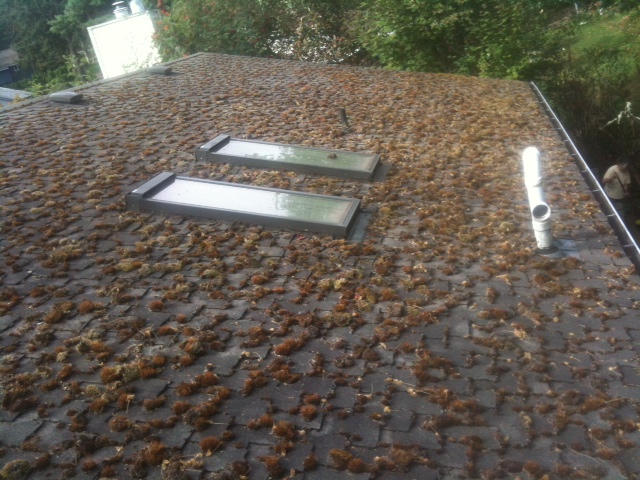
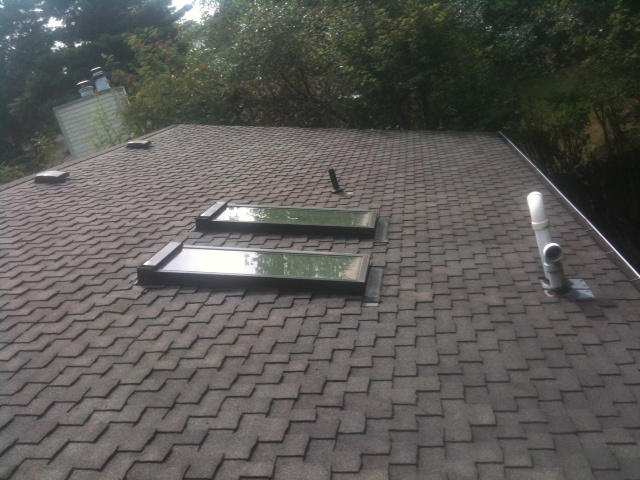
The rubber collar around a pipe jack dries out and cracks with age — it's the single most common source of roof leaks we find. Replacing it before it fails is one of the most cost-effective repairs there is.
Nail heads left exposed to the weather work loose over time and open a direct path for water. We reseal or replace them before that happens.
The cap shingles running along the peak of your roof take the most weather exposure of anywhere on the roof — we replace them when they're cracked, curling, or missing.
Around chimneys, skylights, and valleys — anywhere two roof planes or a roof and a wall meet — is where flashing failures show up as leaks inside the house.
We pull a sample of your existing shingle, pressure wash it if it's dirty so the true color shows, and take it to a roofing supply warehouse to match the exact make and manufacturer. If that shingle's been discontinued, we match it as close as we can get.
If a roof is actively leaking, we'll tarp it to stop water getting in while a real repair gets scheduled.
That's Jesse's approach to almost every leak call. Rather than jumping straight to a full restoration bid, a leak usually starts with a look — we check the attic or crawl space to locate where water's actually getting in, then inspect the roof itself to see what's causing it. A full roof leak inspection runs $50, and a full inspection with minor repairs included — sealing a few top nails, replacing a pipe vent boot or two, that kind of thing — runs $150.
If the small fix doesn't fully solve it, you haven't lost anything — you've got a clear, photographed picture of what's actually going on before anyone commits to a bigger job. Jesse's stated track record is a 100% success rate fixing leaks, with all work guaranteed.
Every job we do — cleaning or repair — includes a full, photo-documented roof inspection emailed to you afterward. That means the pipe boots, nail heads, flashing, and ridge caps get a real look every time a crew is up there, not just when something's already dripping into the attic.
When we spot something small during a cleaning, we fix it on the spot instead of letting it turn into a $150+ leak call later. And if a roof already has an active leak, that repair happens before the cleaning — no point washing a roof that's still letting water in.
If a roof has already lost its granules and is showing bare fiber underneath, no amount of repair or cleaning is going to buy it much more time. We'll say so, and point you toward a roofer we trust to do the replacement — not because we're being generous, but because we genuinely don't do that work ourselves, so there's no reason for us to steer you there before it's necessary.
Great work isn't cheap, and cheap work isn't great — that goes for the repair we do and the referral we give.
Tell us what you're seeing — a stain on the ceiling, a drip in the attic, missing shingles after a storm — and we'll take a look. Start small, get an honest answer, and go from there.