An overhanging limb isn't a curb-appeal problem. It's the reason moss keeps coming back after we clean it off. JNR's tree crew — led by Dan, with 20+ years working in trees — clears back what's actually feeding your roof's moss problem.
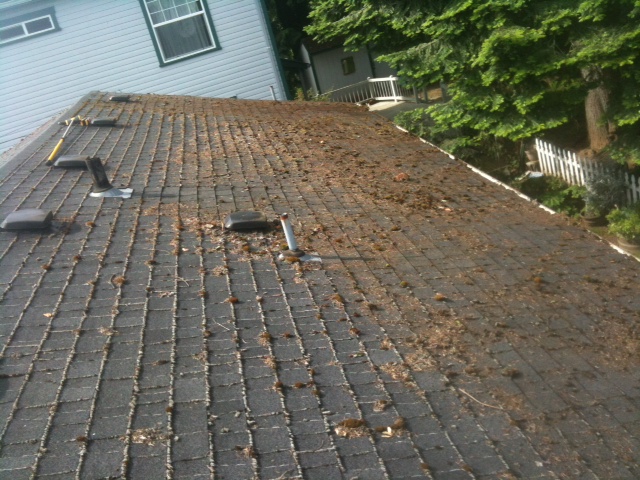
It drops needles, leaves, and seed pods onto the shingles — the organic matter moss spores need to root in. It blocks the sun and wind that would otherwise dry the roof out between rains, so the surface underneath stays damp far longer than it should in a Portland winter. And it gives squirrels and other critters a bridge straight onto the roof, where they can do their own damage to shingles and vents.
Cut the limb back, and you've taken away the shade and the debris before we ever treat the roof. It's the difference between fighting moss once and fighting it every year.
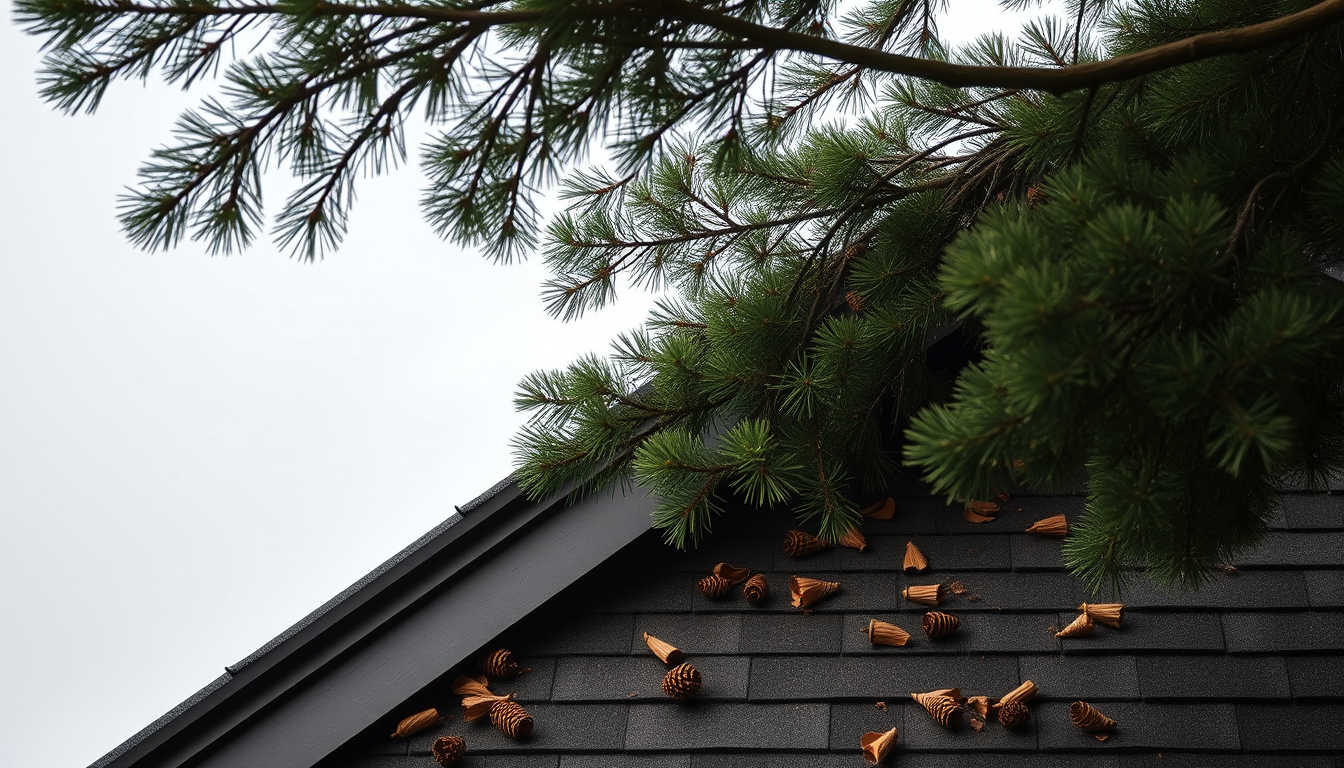
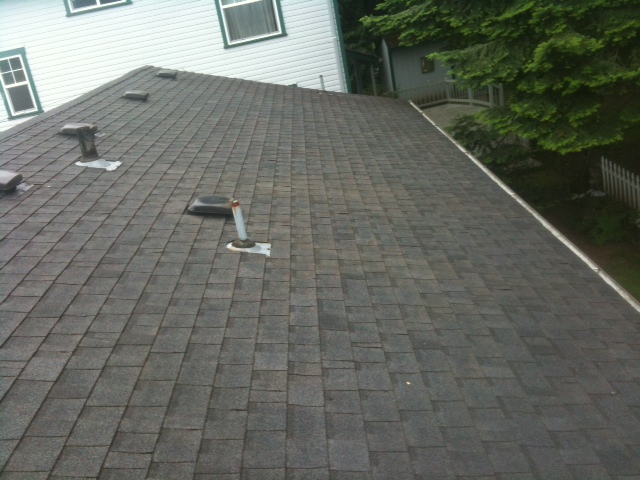
Two real Portland roofs, both shaded by mature trees. Neither has been cleaned yet — this is the buildup a canopy leaves behind before moss even takes hold.
The cause: needles and leaf litter collect fastest along the roof edge closest to the tree line — exactly where moss gets its start.
The effect: the shaded side of this roof stays damp long after the open side has dried — the canopy alone is enough to speed moss along.
Here's exactly what our tree work covers, honestly, so there's no guessing about what you're getting.
Standard cutback is at least 5 to 10 feet from the roofline and gutters — enough to open the roof up to sun and airflow. Want more clearance than that? We'll trim further on request.
We prune for the tree's health and structural integrity, not just what's touching the roof, and we take deadwood down for safety — so a wind storm doesn't turn a dead branch into a hole in your roof.
Dan runs our tree division with over 20 years working in trees, and the work goes beyond roof clearance when you need it: tree pruning and removals, larger shrub and bush trimming, bamboo removal, and yard cleanup with debris haul-away.
Just want the roof-facing branches cut back? That's an easy add to any roof visit.Tell us what you're seeing and we'll tell you what actually needs to come down. Quotes and conversations are always free, no obligation either way.
It stops feeding the problem going forward, but it doesn't touch what's already growing in the shingles. That's why tree work makes the most sense scheduled alongside a roof cleaning: we clear back what's shading and littering the roof, then clean and treat what's already taken hold — in one visit instead of two trips months apart.
Ask about combining tree trimming with your roof cleaning or maintenance plan visit when you request your estimate. We'll build it into one job.
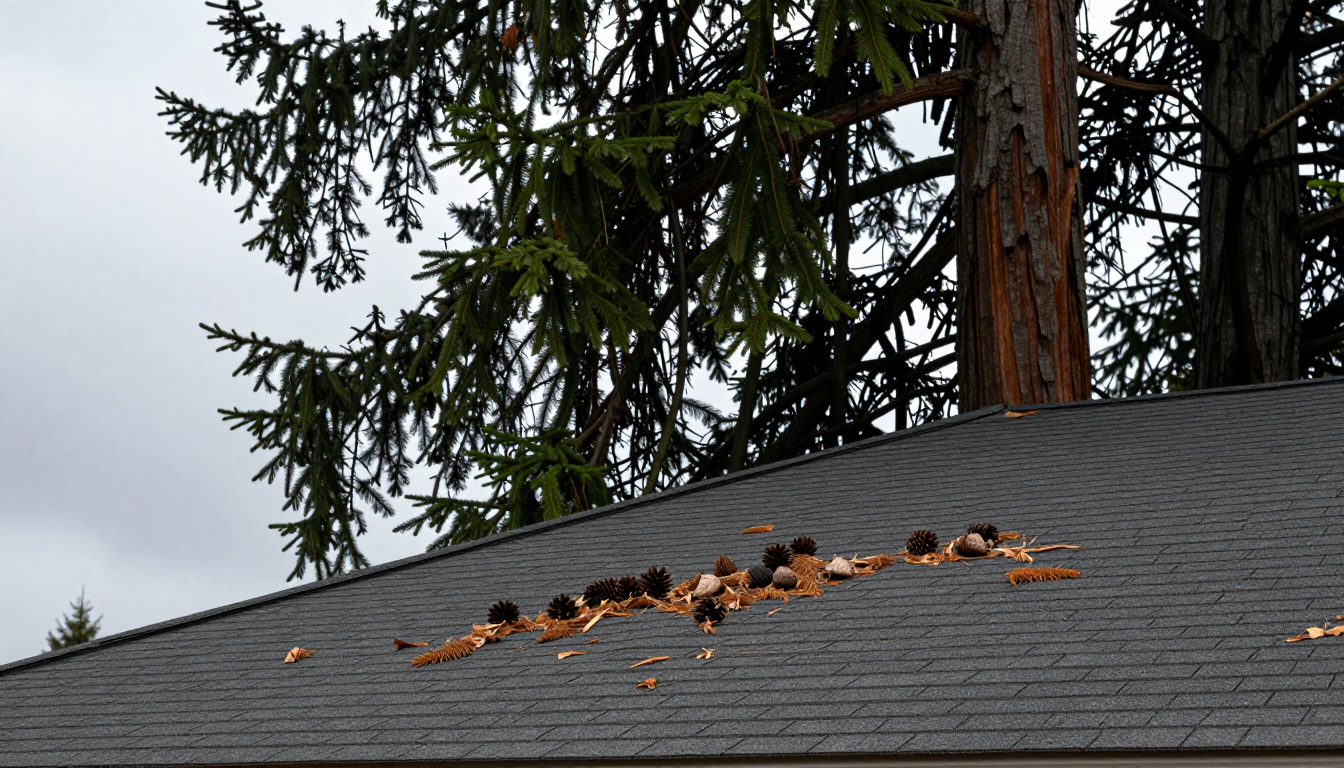
Tell us what's hanging over your roof and we'll give you an honest read on what needs to come down — paired with a free roof inspection if you want one.